A pan is an essential component of any kitchen. You'll agree that it would be very difficult to imagine a kitchen without a pan today. While choosing a pan might seem simple, they can vary in size, type, weight, materials, and even fastenings! We have prepared a guide to help you navigate the selection of a good pan more easily.
TYPES OF PANS
Pans can be distinguished by various sizes (20; 24; 26; 28; 30; 32 cm ….. larger ones are more intended for professional use (in the catering industry)).
- Deep pans – universal pans for people who want to fry food, cook stews and sauces in one pan at home.
- Shallow pans – for frying food.
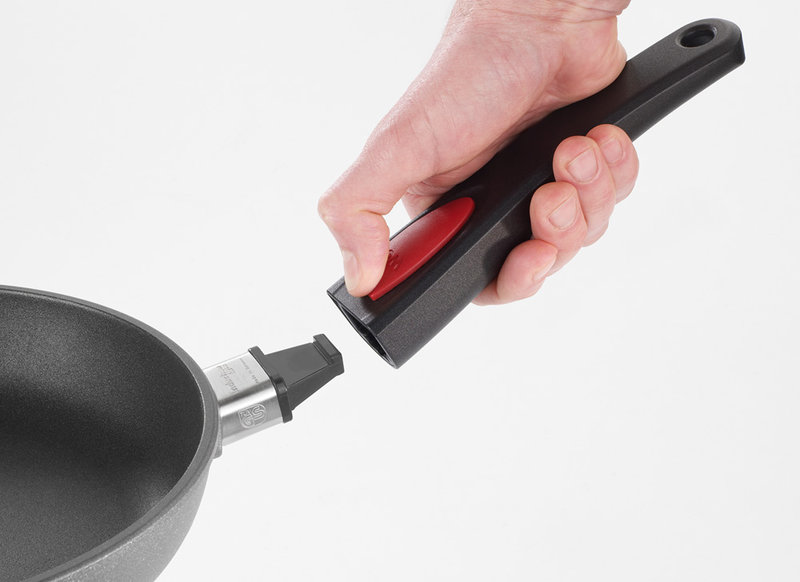
- Pans with removable handles – very handy for storage - they don't take up much space; they can be placed in the oven.
- Grill pans – recognizable by the ridges on their inner surface, designed to make cooked meat/fish juicier.
- Wok pans – conical pans designed for cooking Asian dishes.
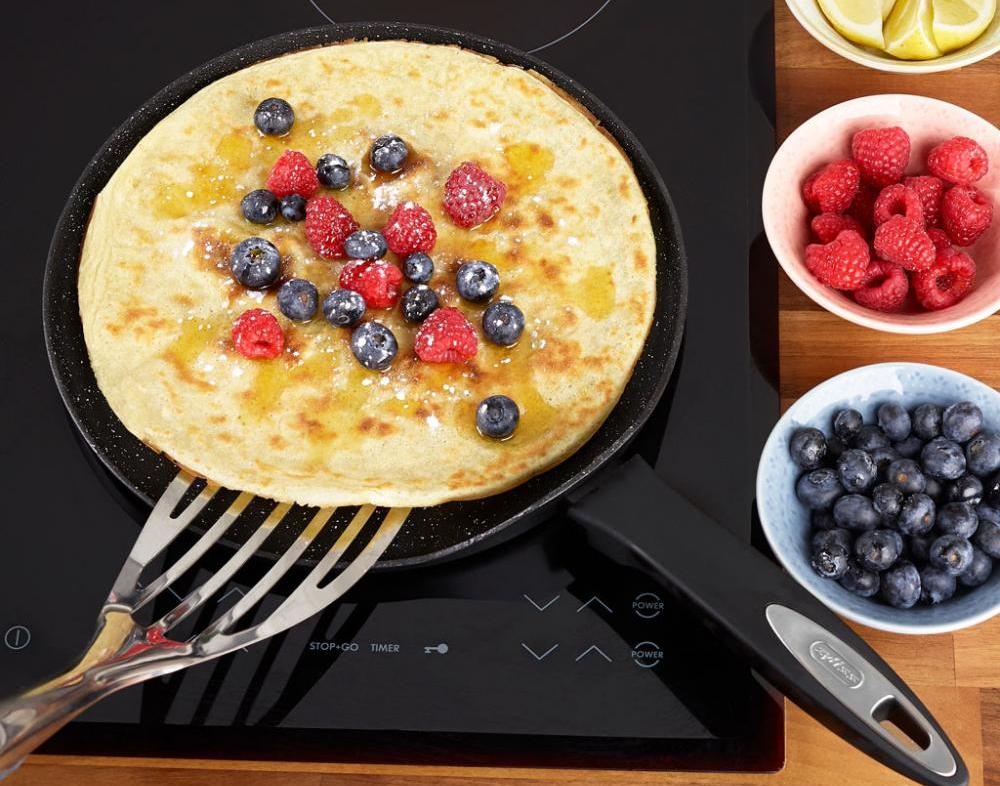
- Egg and pancake pans – for a single pancake, or for several (round compartments for each pancake separately).
PAN MATERIALS
Pans made of different materials are suitable for different purposes. Generally, non-stick coatings are intended for home use, ideal for frequent use by people who like pans that heat up quickly, are easy to wash, and require little fat during cooking. It is not recommended for regular use, but can be occasionally washed in a dishwasher. Metal utensils are not recommended. The downside is that they cannot be used at high temperatures – only at low and medium.
Cast iron pans are well known to us from the 90s, still beloved in many grandmothers' kitchens. Downside – heavy, especially when full of food. Requires a lot of fat. Upside – creates a great crispy crust. Metal utensils can be used. Tends to rust – rust must be scraped off and the pan re-greased by searing fatty meat. Can be used at high temperatures for a long time. Heats up slowly, but retains temperature for a long time. Cannot be washed in a dishwasher, only by hand!
Iron, stainless steel pans are mainly used in professional kitchens. They withstand high temperatures for a long time, can be washed both in a dishwasher and by hand. Metal cooking utensils can be used. A large amount of oil is required. Mostly intended for high-temperature frying – for crispy fish, vegetables, meat.
Coated Pans
Non-stick coating:
To make the non-stick coating easier to apply and have better adhesion, a more porous material – aluminum – is used. This is also a material that heats up quickly and distributes heat quickly and evenly. Since cookware with a non-stick coating is specially designed for home use and especially for people who want to prepare meals quickly and easily, these properties are very important.
Ceramic coating:
Ceramic coating is a type of non-stick coating – usually white or light in color. Just like non-stick cookware, the body is made of aluminum. The main difference is that ceramic particles are added to its composition, and as a result, even less fat can be used. In reality, these coatings are not practical because they do not withstand high temperatures – regular use of high and medium temperature settings burns out the coating (often accompanied by dark spots on the coating surface) and food starts to stick.
First, you need to consider what kind of stovetop you will be cooking on. If you don't have an induction stovetop, any pan available in stores will do. However, if you own an induction stovetop, you must pay attention to ensure that the pan you purchase is compatible with it. A pan compatible with an induction stovetop is perfectly safe to use on all other stovetops – induction is just an additional feature, which, of course, also makes the pan slightly more expensive. Second, you should understand what you need the pan for? What kind of food will you be cooking? For how many people?
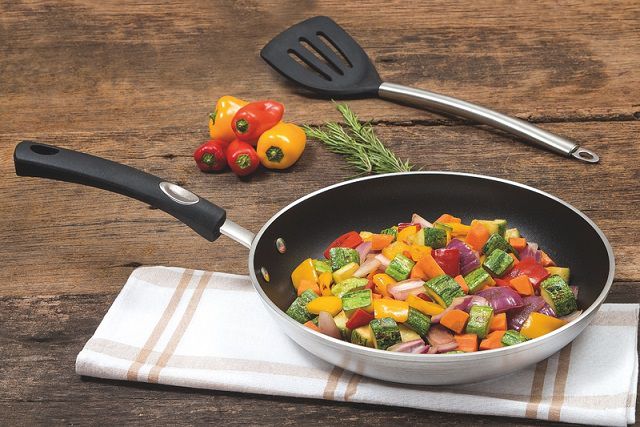
If you are looking for a versatile pan that will work for frying fish, vegetables, and preparing sauces, a deep pan with a non-stick coating will be the best choice. The deep shape of the pan will allow you to easily cook stews and fry food, all while using a small amount of fat. Pans with a non-stick coating are ideal for everyday use when, in our busy lives, it is important for things to be functional, easy to maintain, and at a reasonable price.
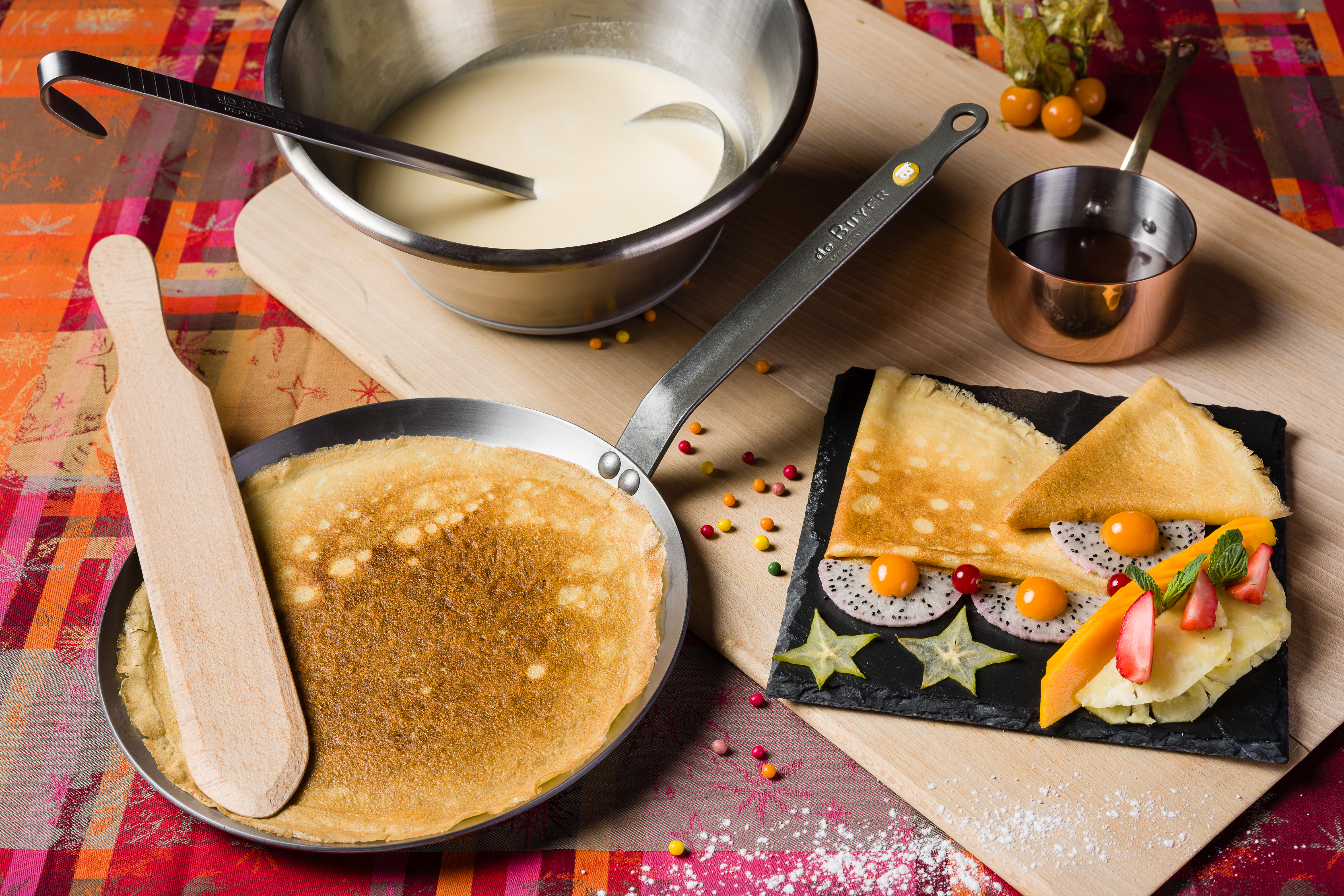
If a pan is needed for cooking meat, the best choice will be a cast iron or stainless steel pan – a material that withstands high temperatures and thus allows you to cook crispy meat on the outside and juicy on the inside. With a non-stick pan, it will not be possible to achieve such an effect, because they do not withstand high temperatures and therefore the crispy crust will not be the same as in the aforementioned pans.
Third – pay attention to the size of your stove rings (an induction hob will not have this problem) – do not buy a pan that is larger or significantly smaller than the rings on your stovetop. The diameter of the pan must match the diameter of the ring, otherwise there is a high risk of burning the edges/handles of the pan and unnecessarily consuming energy.
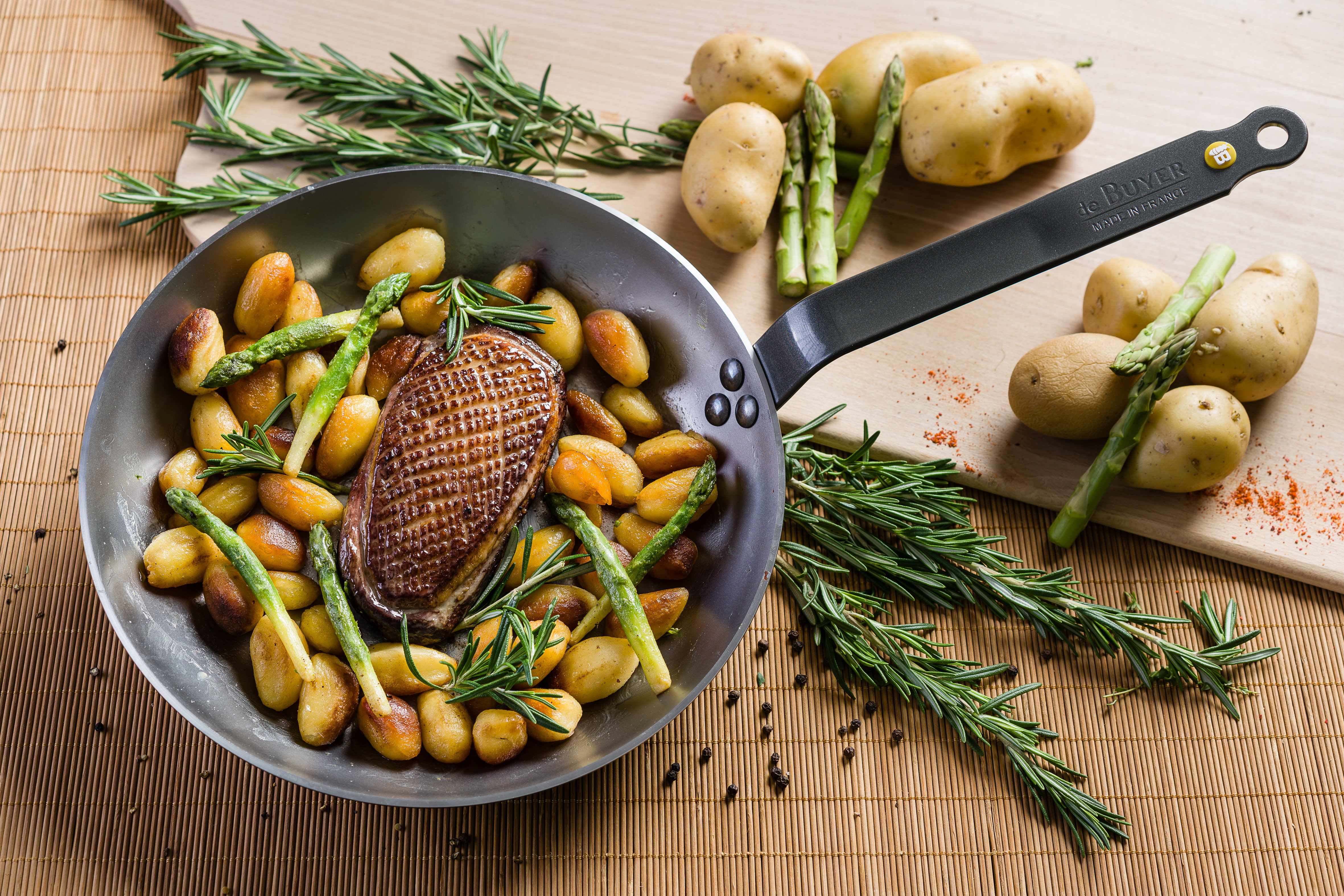
Definitely pay attention to the fasteners – whether the handle is stable and doesn't wobble. The most effective are stainless steel rivet fastenings, but these increase the price of the pan and are usually not used for pans in the lower price segment to keep the final price attractive to the customer. The second type of fastening is a screw – it often loosens, which is not a big deal because it can simply be tightened, but what if it happens while moving a pan full of food? You have to be careful. If you see that the screw is already loose in the store, it's better not to buy such a pan. Also, attention should be paid to whether the pan stands stably, doesn't tip over (can happen if the pan's handle doesn't match the pan's weight), doesn't wobble and is without deformations; a pan with uneven shapes can impair heat distribution and the food will cook unevenly, plus it will not be possible to put a lid on.
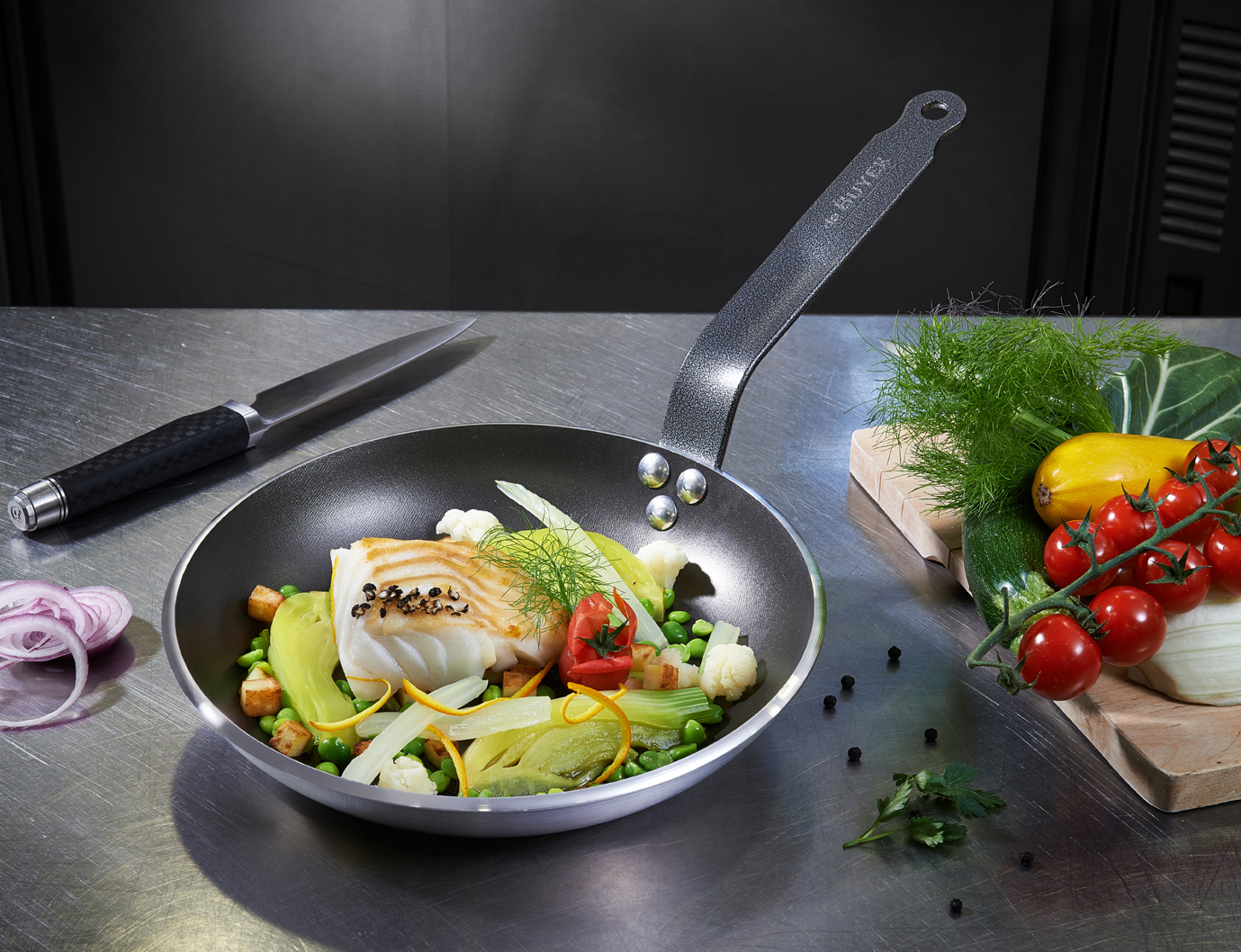
Given that the basic principle of pan production remains the same and inventing something new is practically impossible, manufacturers play with small details and additional elements to give pans not only new properties and improve existing ones, but also to make them more aesthetically pleasing. Pans have long ceased to be just kitchen accessories, but also serve as design elements. Below are some elements added to pans during the manufacturing process:
- Thermospot – a color indicator that shows when the pan is hot and when it has cooled down; helps prevent overheating the pan and prolongs its lifespan.
- Various new types of non-stick coatings – change according to market trends – for example, granite coatings are currently popular.
- Materials that allow the use of metal kitchen utensils on pans – more durable materials (additives of mineral particles that make coatings more resistant to wear).
- Also new modern materials (silicone) – which make pans more functionally comfortable (silicone parts) – silicone handles (comfort, safety factor).
- Removable handles – for easier pan storage (will take up less shelf space), for use in the oven (must be read specifically on each pan's packaging).