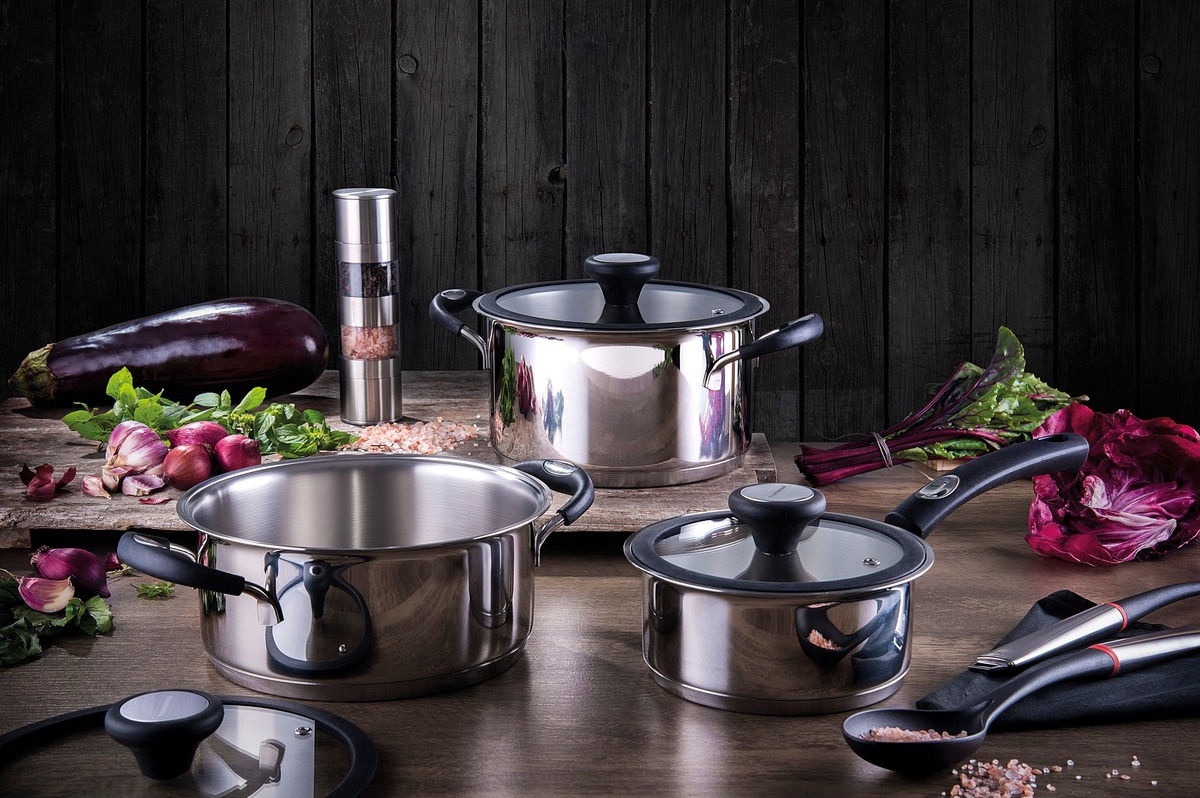
You can't make good soup in a bad pot!
The cooking process itself depends on the quality of the pot: cheap materials can impart a certain smell and aftertaste to the food. It is very important to choose the right pot from the first time, as you will use these same pots for a very long time afterwards. That's why we have prepared a detailed guide to help you choose the right pot.
PURPOSE OF USE
If you don't have any pots at all, then everything seems simple - buy a set of 5-6 pots, but what if you feel like you have enough pots, but it's uncomfortable to cook a certain dish? Not everyone knows and understands that each pot has its own purpose of use. Let's take a closer look:
- Large pots up to 7+ litres are ideal for soups, and in summer - for compotes. However, if you live alone and can do without a first course, then you can also do without this pot.
- Medium-sized pots from 3-7 litres are considered universal pots. They are used for heating up first courses, preparing small portions of soup, boiling pasta, rice, etc. A pot of this size should be in every kitchen.
- Small-sized pots from 1-3 litres with a long handle are used for boiling eggs, sausages, vegetables and porridges. A lightweight, convenient and practical pot.
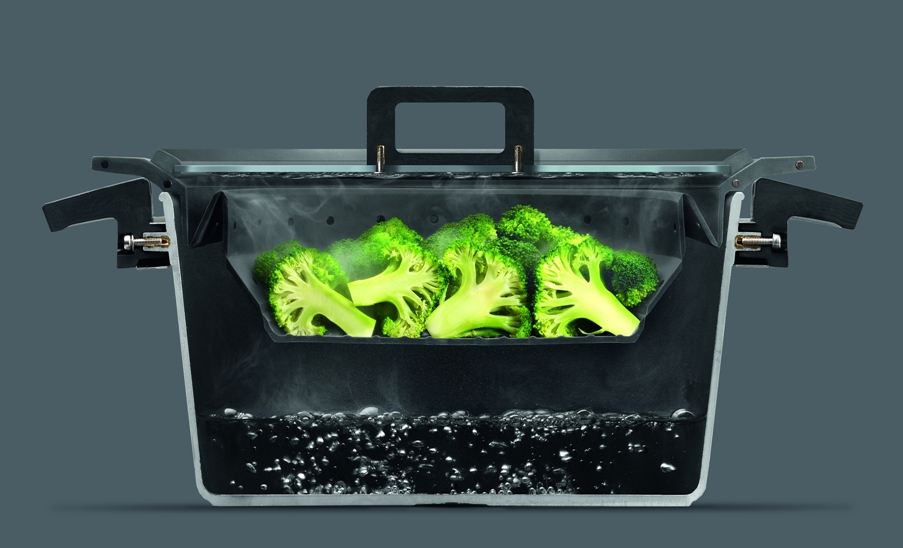
- Pot with triple-layer walls (stainless steel-aluminium-stainless steel) - an excellent heat conductor. It distributes and maintains heat evenly not only along the base of the pot, but also upwards along the walls. Food is cooked evenly with less energy consumption.
- Deep pots: pots with high walls - ideal for preparing liquid dishes with a large amount of liquid - soups, boiled pasta, asparagus. Usually used for steaming and boiling.
We have described the minimum set that is sufficient for preparing all main dishes. Of course, professional chefs will think it is critically small, and those who practically do not cook at home will decide that five pots are too many. Therefore, carefully consider which of them you need most - it is better to have only 2 pots in the kitchen, but they are good and of high quality.
POT MATERIALS
- Enamelled pots - pots with an iron body covered with enamel. Not suitable for cooking products without oil, in a small amount of liquid - they will stick, because they do not distribute heat evenly. A legacy of old times, when they were affordable and, in fact, the only thing you could buy besides aluminum pots and casseroles. Enamel easily gets damaged, cracks after impacts, temperature changes; the metal under the enamel starts to rust and the food absorbs a metallic taste.
-
Cast iron pots - cast iron is an alloy of iron and carbon, and a special greasing method is used in the manufacturing of cast iron dishes, which gives the surface of the dish non-stick properties, but in reality there is no special non-stick coating. Advantages of the material: retains heat for a long time and distributes it evenly - food can be cooked using low energy; resistant to high temperatures; can be used in the oven. Cast iron pots are excellent for preparing meat soups and stews - dishes that cook for a long time - they enhance their taste and save energy during the long cooking time. Disadvantages: usually heavy and difficult to move.
- Pots with non-stick coating - to make the non-stick coating easier to apply and to have better adhesion, a more porous material - aluminum - is used. This is also a material that heats up quickly and distributes heat quickly and evenly. Since non-stick cookware is especially designed for home use and especially for people who want to prepare meals quickly and easily, these properties are very important. Pots with non-stick coating will be for people who do not want to buy individual dishes for each type of food in their kitchen - they will be quite universal.
- Pots with ceramic coating - ceramic coating is a type of non-stick coating - usually white or light in color. Just like non-stick coated dishes - the body is made of aluminum. The main difference - ceramic particles are added to its composition, and what is important - significantly fewer chemical compounds are used in the manufacturing process - which makes them more suitable for hypoallergenic people. Ceramic coatings usually have excellent non-stick properties, as a result, even less fat can be used when cooking.
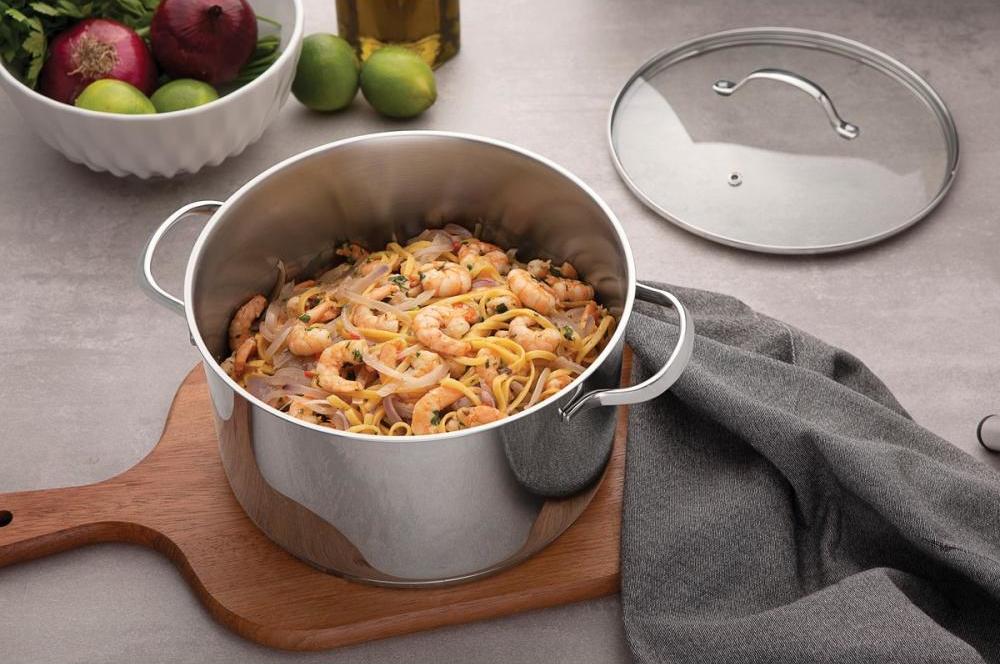
- Stainless steel pots - mostly made of two types of stainless steel: 18/0 and 18/10 - a hygienic material that is also used for the production of medical equipment and objects. Hypoallergenic, suitable for people with allergic reactions. There is no coating that would facilitate use, so a large amount of fat is required for frying. Particularly suitable for boiling and simmering - in small or medium amounts of liquid - soups, sauces, jams - they will retain liquid for a long time and will not allow the food to lose its taste. Pots, in principle, can be used forever. It is practically impossible to damage them by dropping them, burning them or deforming them. - In terms of performance, the price-to-quality ratio and usability make them the number one choice for buyers.
- Copper pots - their value lies not only in their excellent and pleasing appearance, but also in their heat resistance properties - on the heat resistance scale, copper is immediately behind silver, which ranks first. This is why copper pots/pans are especially used in professional kitchens, where high temperatures and prolonged use are commonplace.
-
About pots designed and not designed for use on induction hobs - the function of the pot does not change, regardless of the hob it is used on. The difference between an induction hob and other hob surfaces is that if the pot/pan is not made of a magnetic metal that adheres to the hob surface, the hob will not start working - the induction coil will not switch on. For other hob surfaces, the power supply must be switched on and the pot will start working. (gas, electric, glass-ceramic). Therefore, pots are either made entirely of magnetic metal, which is usually quite expensive, or the second most popular option - the base of the pot is made of a different material - a disc is stamped that is magnetic and will react with the hob - this reduces costs, but provides the desired result. And, if the hob does not accept the particular pot, then you should check with another kitchen utensil (pot, pan), perhaps the problem is with the hob itself (sometimes the coil is poorly wound, in which case, if there are problems with several induction utensils, you should contact the hob dealer); there have even been several cases in the world where cooking utensil manufacturers have sued hob manufacturers.
SUITABLE HOB SURFACES
This is really very important - not every pot can be placed on a glass surface or a gas hob. Let's analyse it together!
- For ceramic glass hobs - be careful when moving pots across the surface - microscopic dirt particles on the base of the pot or the hob surface can create friction if the pot is pushed across the hob surface - always lift them, don't push them!
- For induction hobs it is important that the bottom of the pot is magnetic (the pot "attracts" to the hob surface), so when buying a pot, always check that the packaging has the appropriate mark indicating that the pot is suitable for use on an induction hob.
- For gas hobs - the main rule is to place the pot on a hob ring that matches the size of the pot's base. (this rule also applies to electric hobs!) Make sure that the flame does not extend beyond the edges of the pot - flames can unnecessarily heat the pot from the outside and damage both its visual appearance and, in the long term, impair its performance quality.
If the flame on the gas hob is uneven (it is larger on one side), it is advisable to use flame diffusers - they will help to even out the flame and prevent the pot's base from being heated more intensely in one place than in another.
Tip: if in doubt whether a pot is suitable for use on a specific type of hob, always check the symbols on the packaging. If the pot is designed for use on an induction hob, it will be suitable for use on any other surface.

GENERAL RECOMMENDATIONS FOR CHOOSING A GOOD POT
It doesn't matter what material or volume you prefer. There are always some important nuances that do not depend on these indicators.
- When choosing between two very similar pots, always choose the one with thicker bottom and walls. Such a pot will heat up longer, but more evenly.
- It is better to put the lid on and move it from side to side - it should not move or slide off.
- If there is a steam vent in the lid - it will help steam escape and equalize the pressure in the pot - the pot lid will not "fly off".
- Examine the entire pot very carefully - no defects or scratches are acceptable. They significantly reduce the longevity of the pot.
- Make sure the bottom is perfectly flat - the pot must fit perfectly to the flat hob surface.
- Pay attention to the handles - the strongest handle attachment is rivet attachment - the handles will be stable for a long time. If the handles are screwed on, there is a possibility that the screw will loosen from time to time and you will have to tighten it yourself. If the handles are already slightly loose and unconvincing in the store - do not buy such a pot! If the handles have started to move when using the pot - be careful - there is a risk of injury! Do not take those that are welded - if they are imprecise, there is a high risk of injury.
- It is better to buy each pot separately, not to buy a ready-made set. In this way, you will only buy the pots you really need.
- If you need to buy several pots, consider buying a pot set - they come in various configurations and a convenient gift box. (for gifting or convenient storage) Usually, pots in a set are slightly cheaper than buying them individually.
- Remember: no matter how expensive and high-quality a pot is - if you do not read and follow the manufacturer's recommended usage rules - the pot will not be able to serve as long and as well as intended by the manufacturer!
- In case of product defects, but the product has not been used according to the instructions for use - the manufacturer has the right to reject the defect! The warranty is only valid for products that have been used according to the instructions for use and have manufacturing or material defects!